
About the
Project
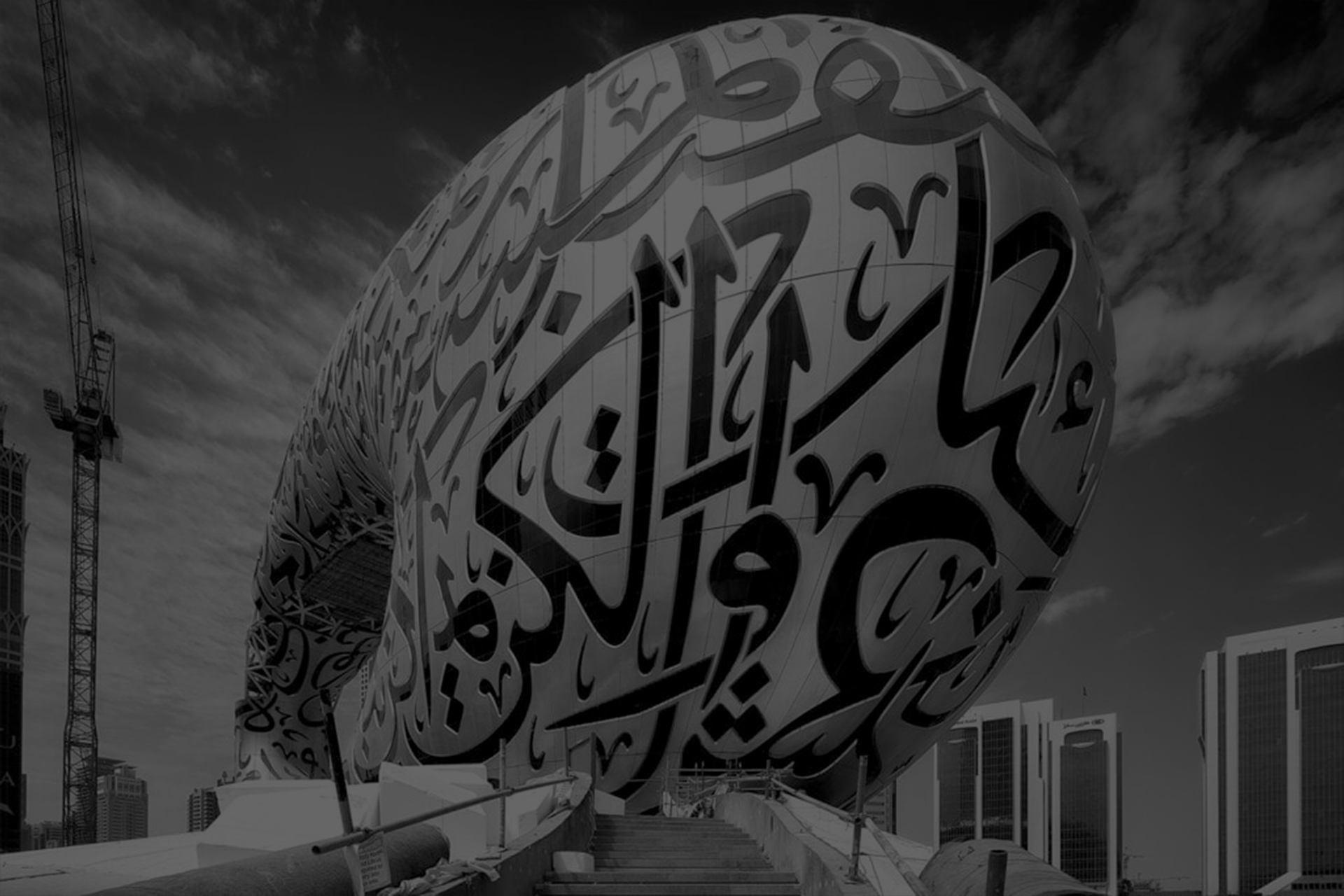
The Dubai Future Foundation engaged Tigerspike to define the visitor experience strategy for the Museum of the Future—a first-of-its-kind institution with no precedent. The challenge was to translate an ambitious, future-focused vision into a cohesive, end-to-end visitor experience that seamlessly integrates physical, digital, and narrative elements. We led the definition of a scalable experience strategy, mapping key visitor journeys and touchpoints to deliver a future-ready blueprint guiding design, technology, and operations.
-
ClientDubai Futures Foundation
-
Year2020
-
RoleStrategy & Innovation Lead
-
AgencyTigerspike
Ignition
Workshop
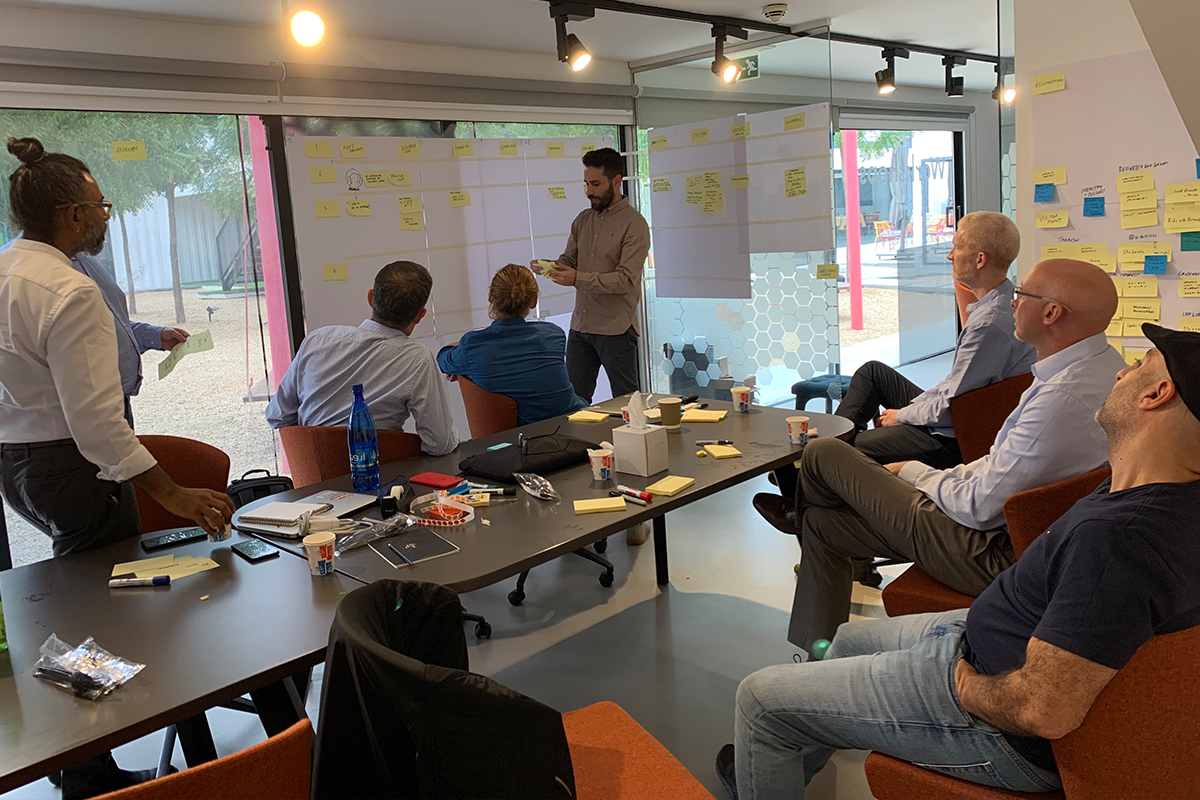
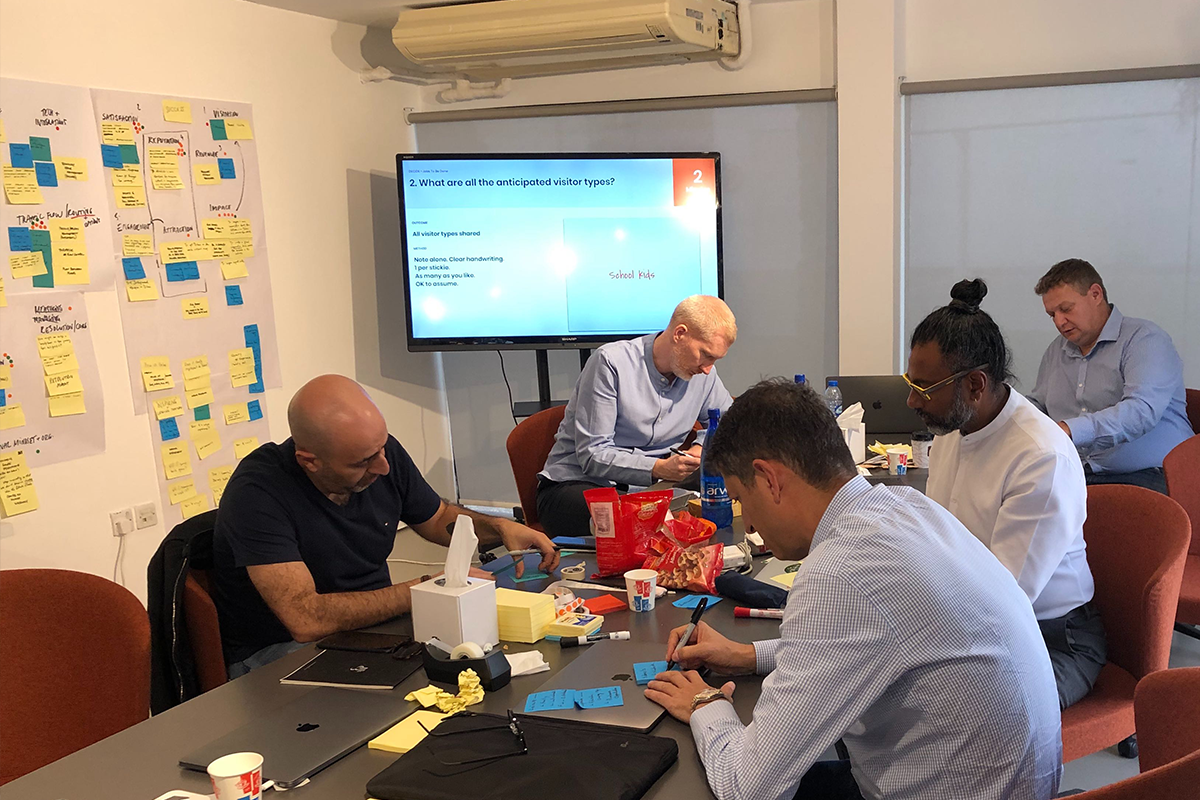
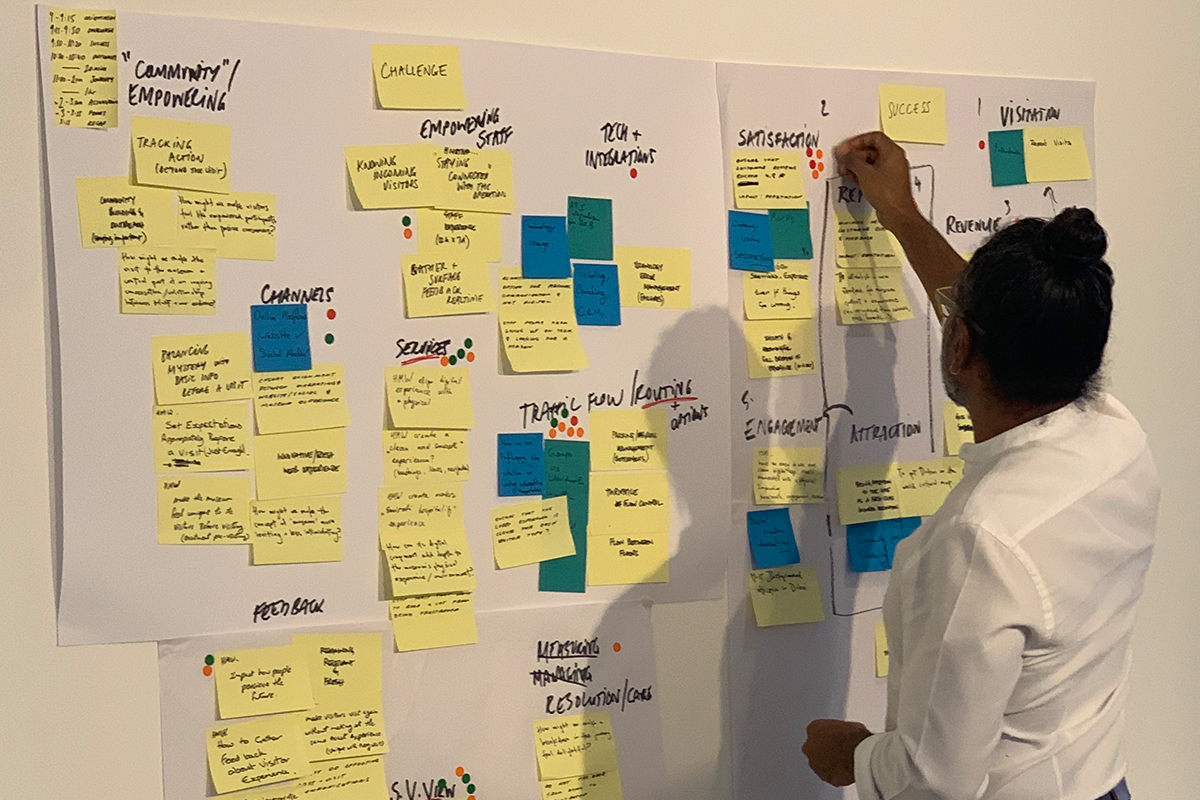
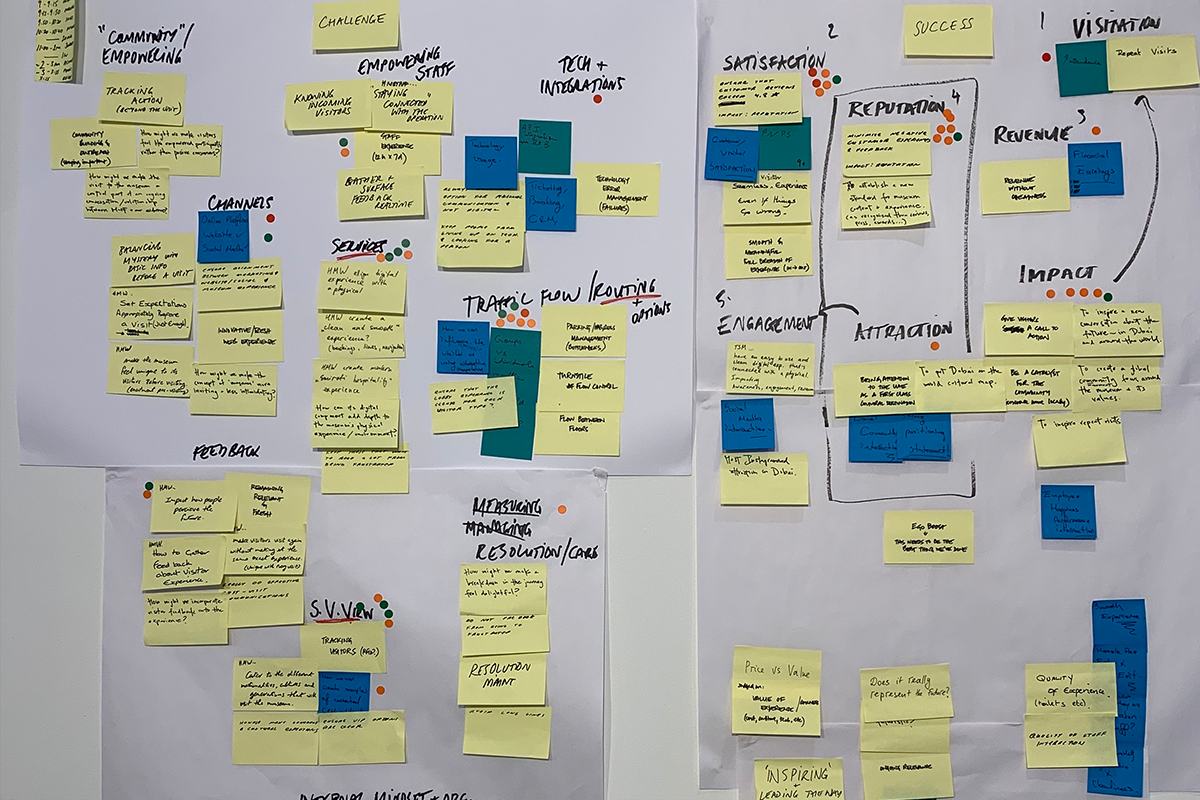
We kicked off the engagement by convening C-suite leaders in a series of structured co-creation workshops, creating a safe, neutral environment for open dialogue and decision-making. These sessions were designed to cut through siloed thinking—aligning stakeholders on strategic objectives, surfacing underlying challenges, and identifying key risks early.
Through facilitated exercises, we translated diverse perspectives into a shared starting point, a clearly articulated vision, and a framework for success with defined metrics. This alignment provided the Tigerspike team with the clarity and mandate needed to de-risk the initiative from day one, enabling a focused, outcome-led approach to delivering measurable value.
Mapping
The Space
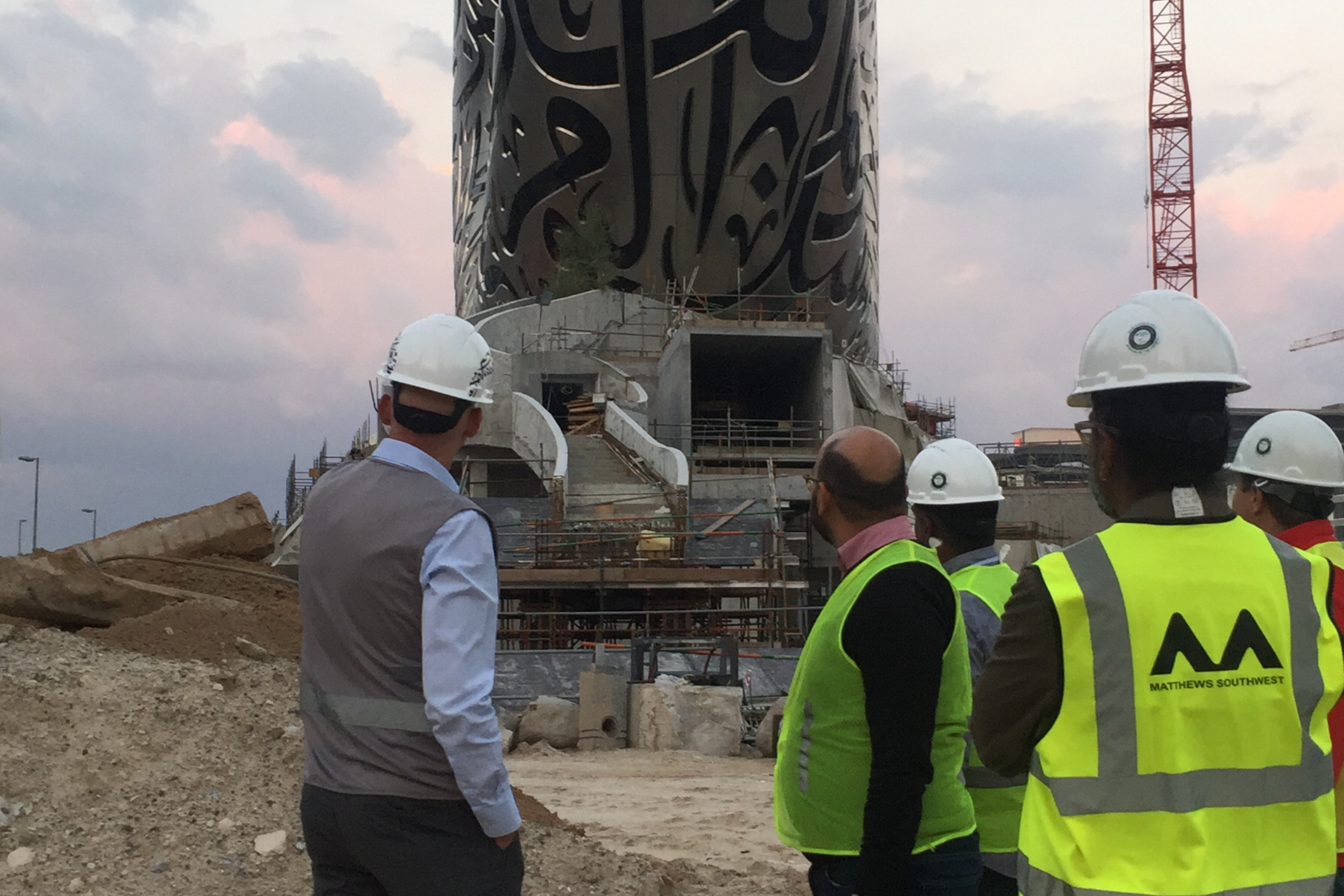
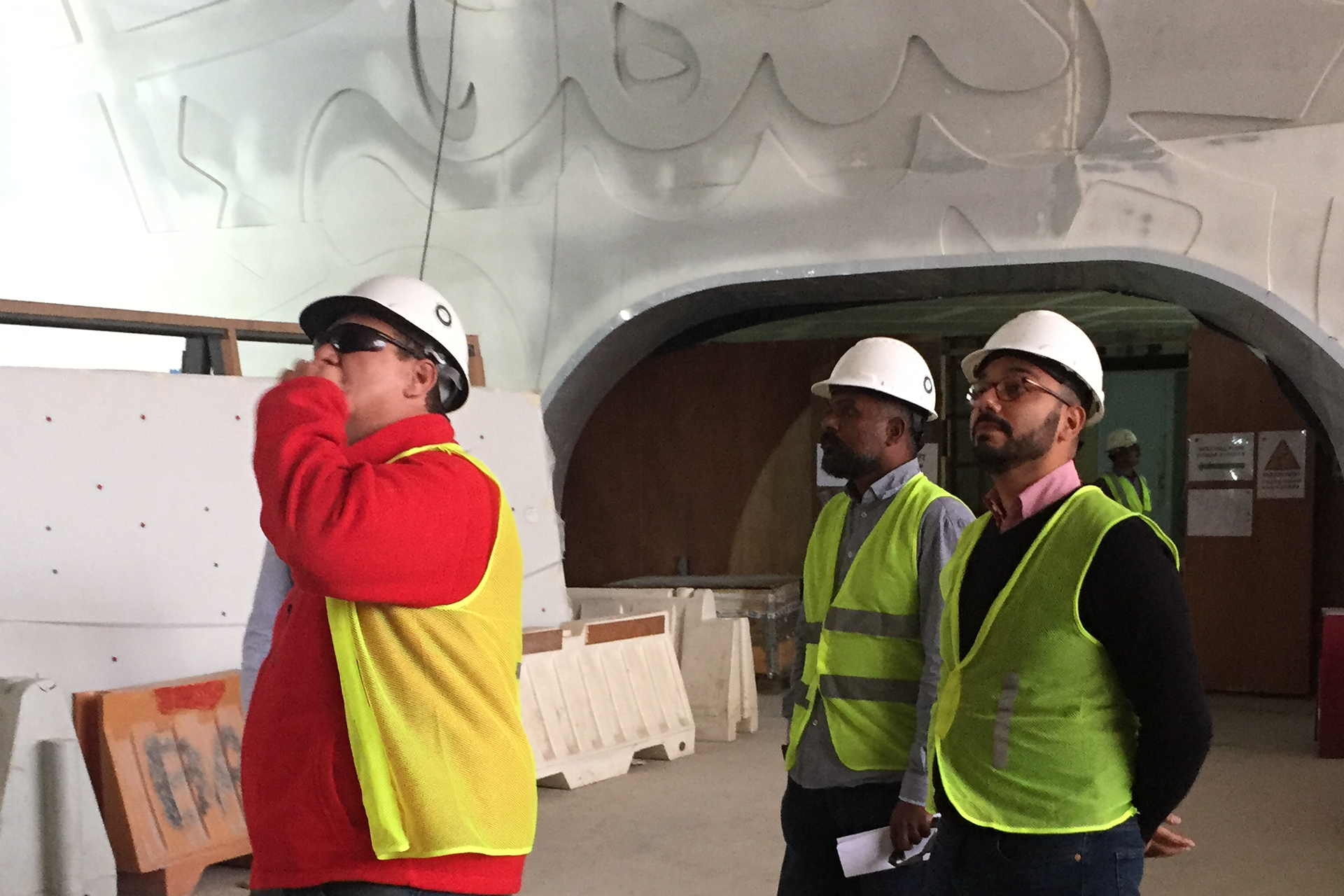
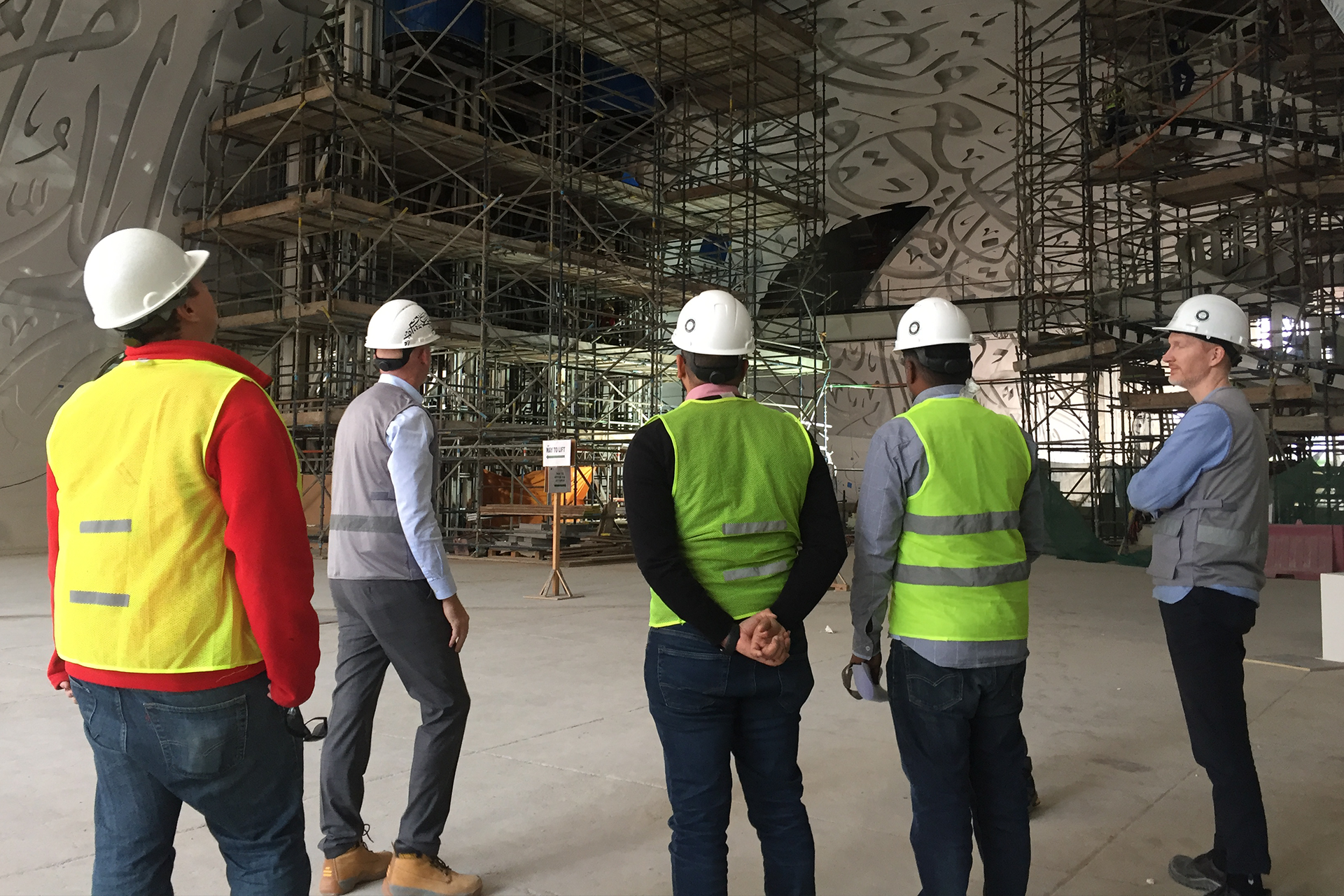
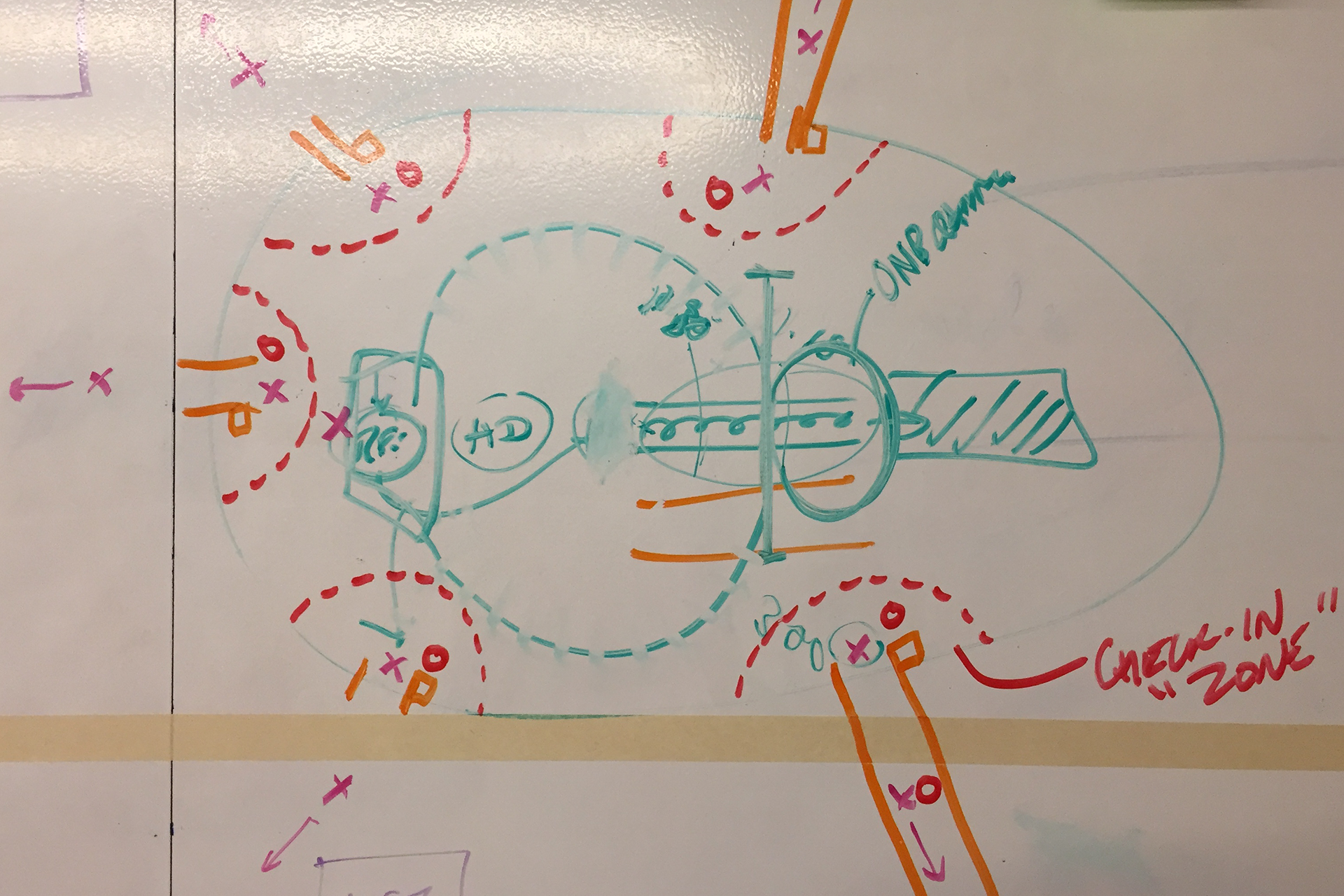
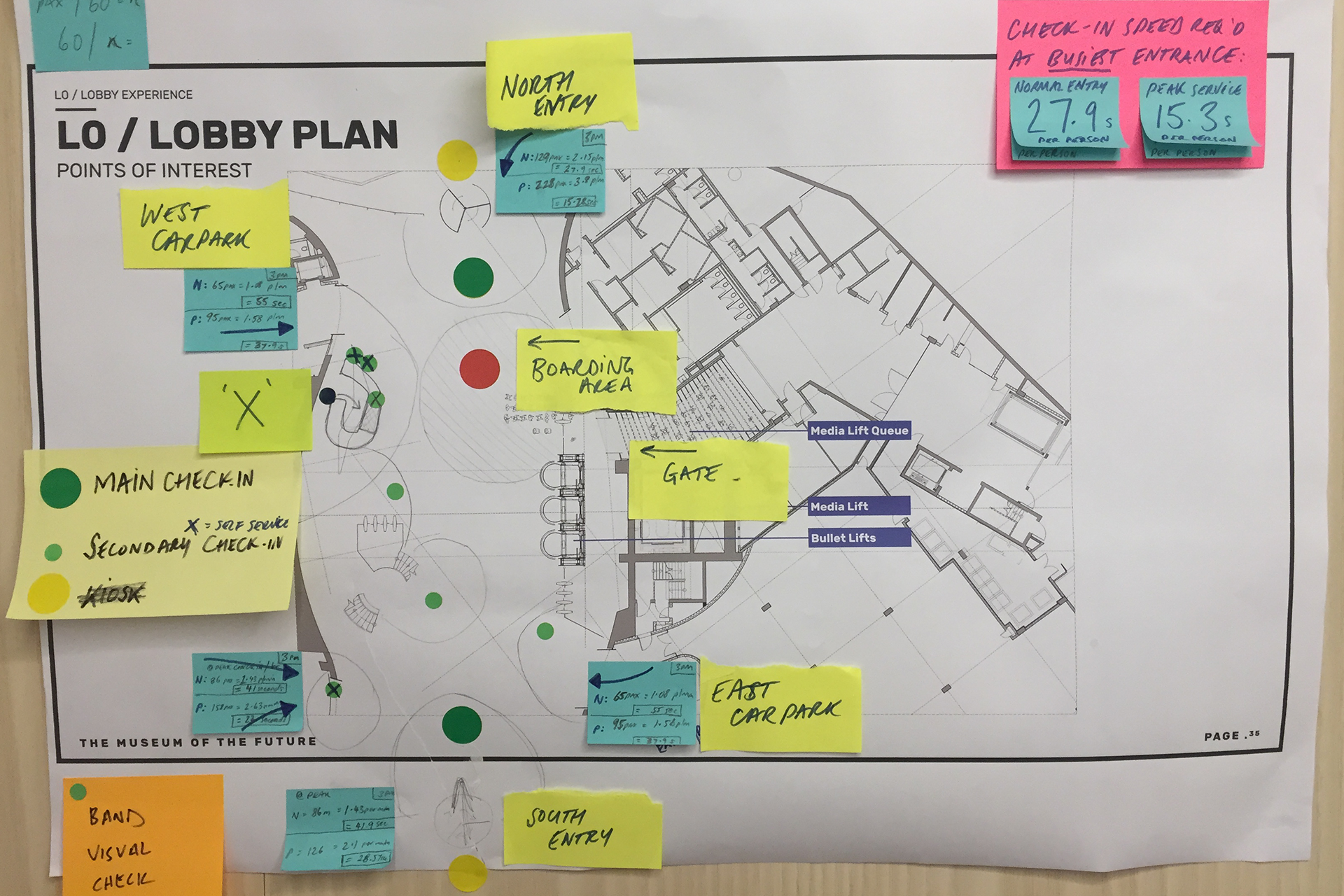
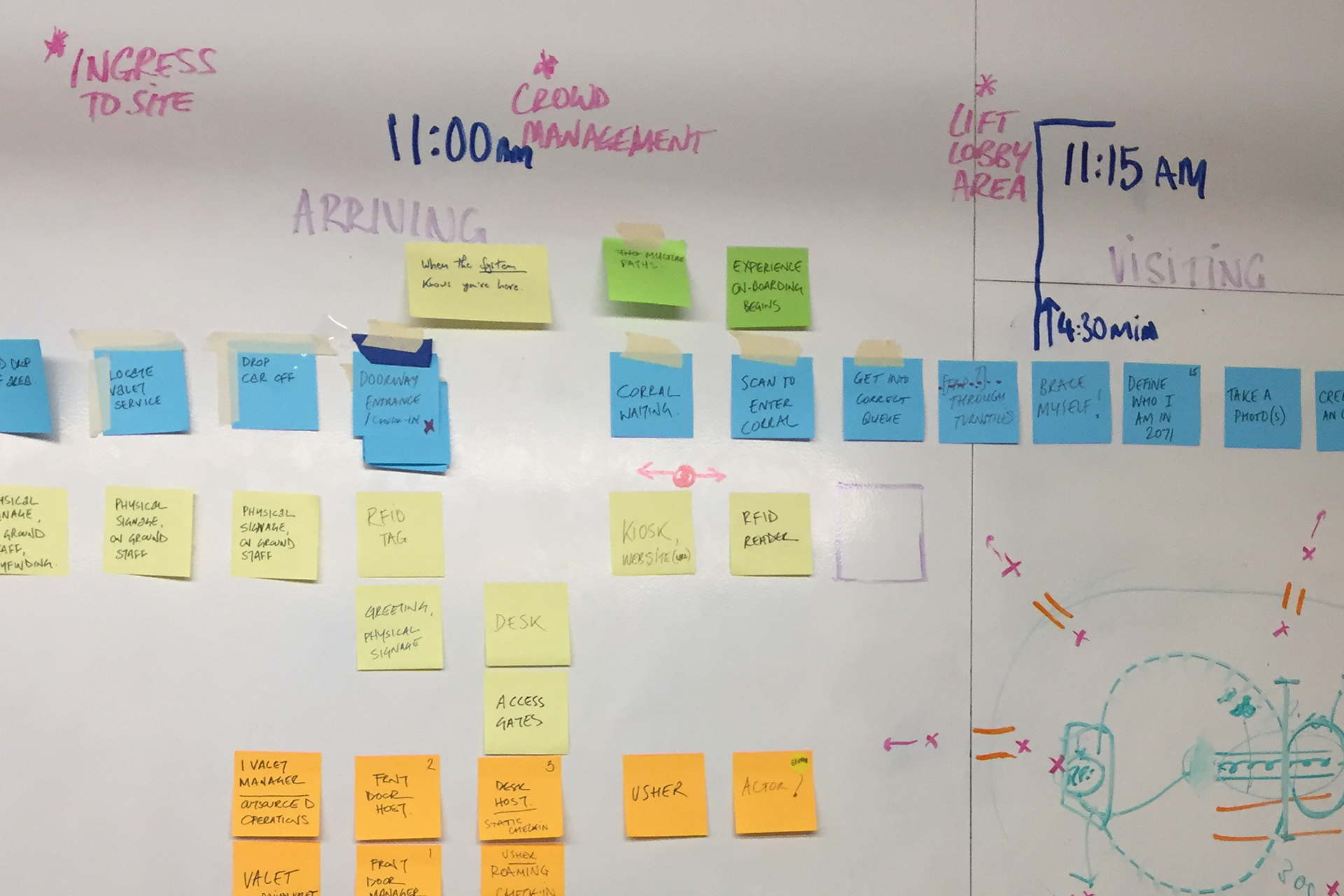
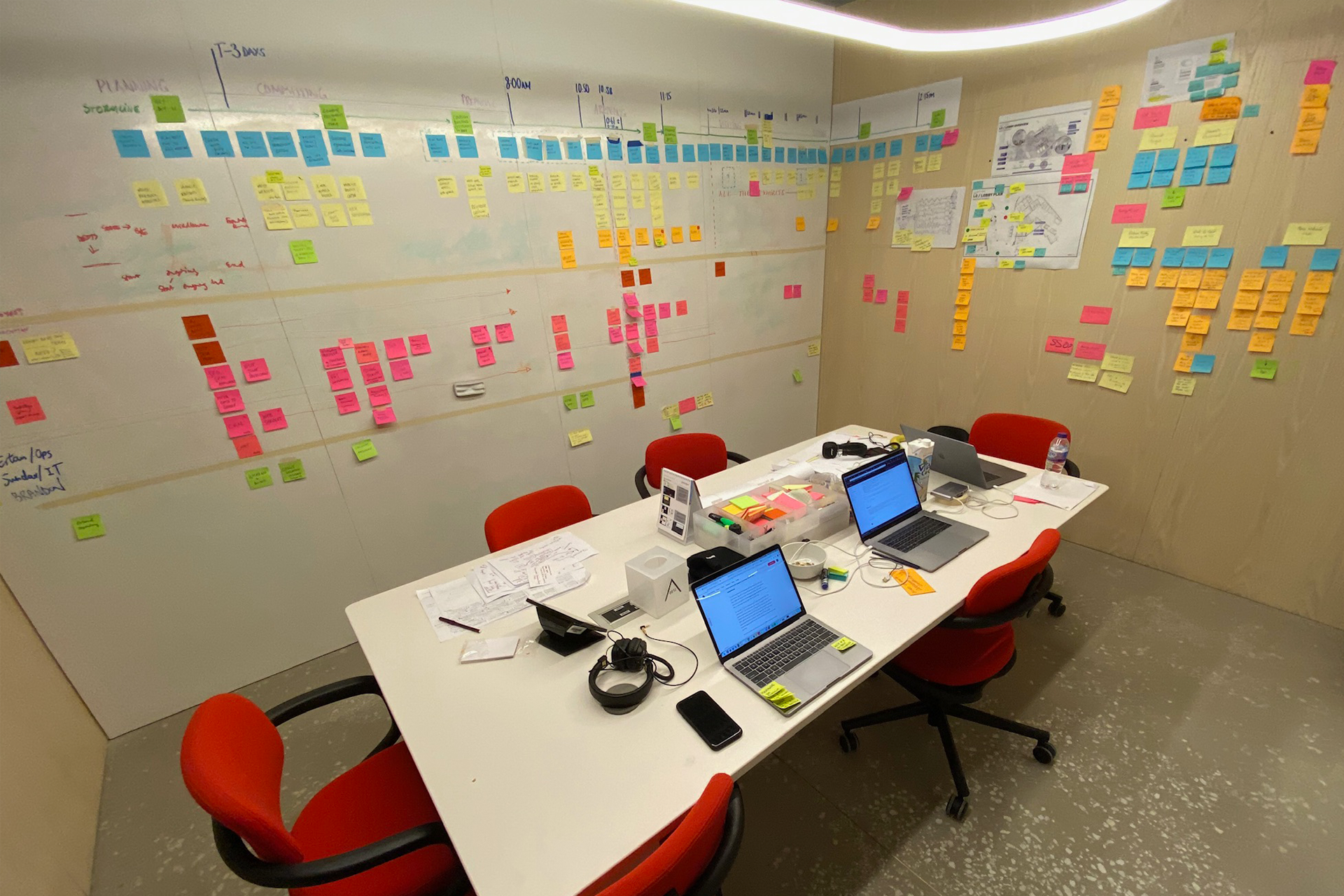
We began by surveying the physical space to understand spatial constraints and visitor flow dynamics, modelling peak-time footfall and throughput to anticipate pressure points. This informed how visitors would be channelled through timed entry, with clearly defined movement paths and pacing across exhibits.
We identified where and how visual and audio cues could be deployed—at key decision points, transitions, and dwell areas—to intuitively guide behaviour, optimise flow, and reduce congestion. Particular attention was given to a global audience, ensuring wayfinding and communication systems were language-agnostic where possible, and otherwise supported by multilingual cues to enable seamless navigation across diverse visitor groups.
This gave us a practical lens on where the architecture enabled flow and where service design needed to compensate. The result was a clearer operating model for arrival, check-in, lobby movement, exhibit access, and transition points across the broader visit.
Mapping
The Service
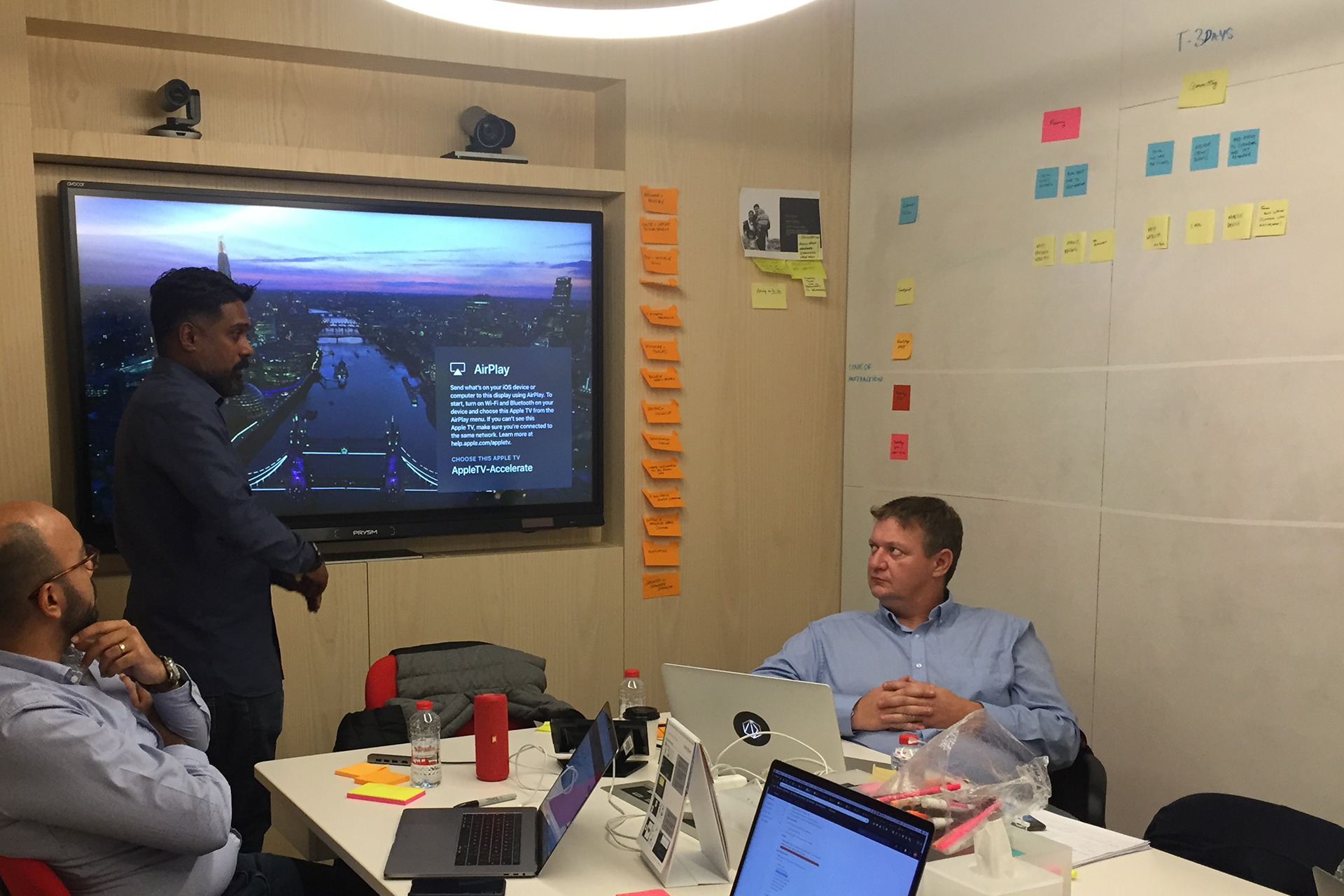
We developed proto-personas to reflect the diversity of the museum’s audience—from international tourists and regional visitors to local residents—capturing a spectrum of needs across large family groups, couples, and solo explorers. Grounded in empathy, this work unpacked differences in cultural expectations, language, digital fluency, and service preferences, ensuring the experience could flex between independent discovery and more structured, guided journeys.
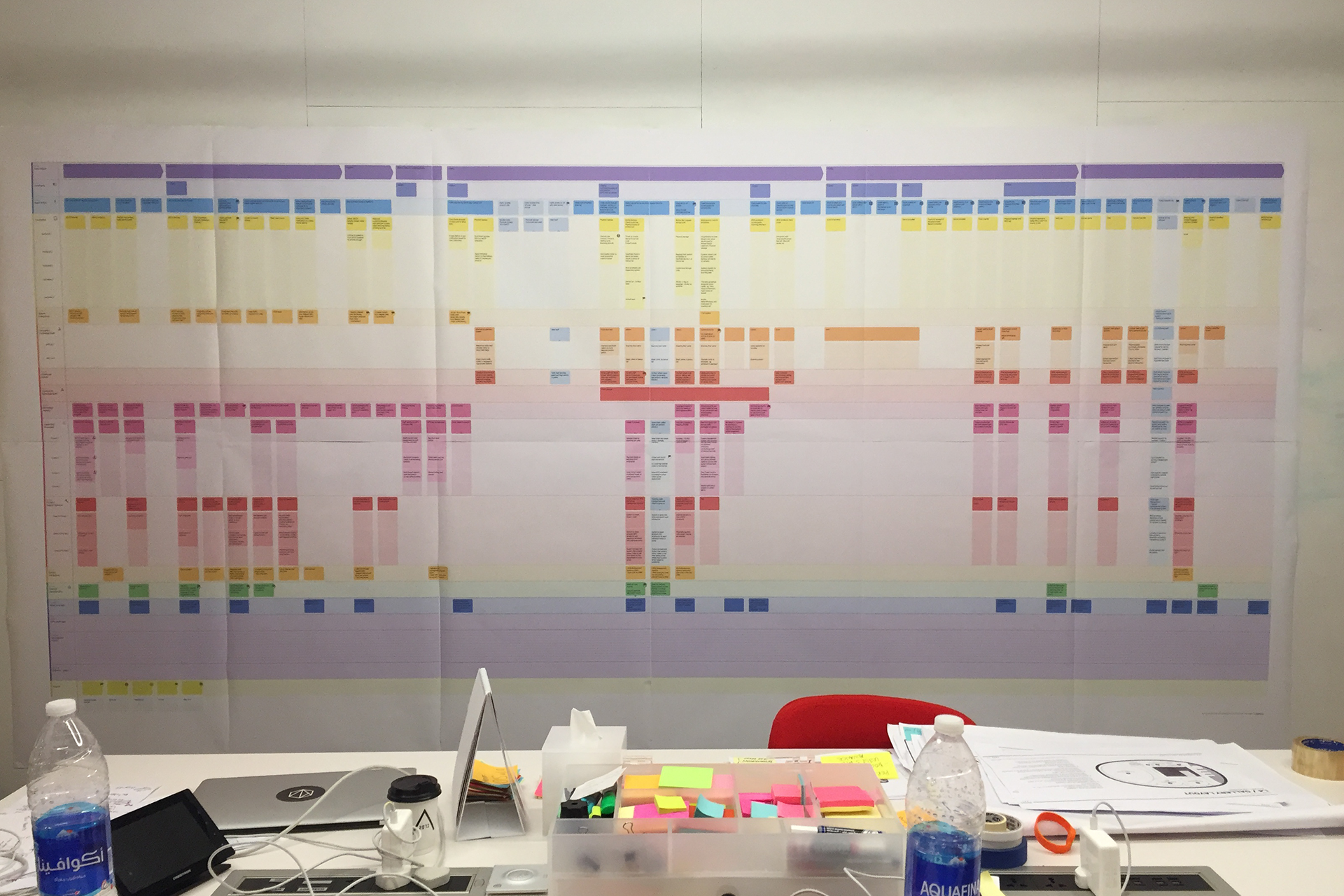
These personas informed a comprehensive experience map that articulated needs, desired outcomes, and potential pain points across the end-to-end journey. We focused on identifying the “Moments that Matter”—from booking (with timely reminders) and pre-visit planning, to transit partnerships with Dubai Metro and Careem to ease access, through to arrival, check-in, wayfinding, in-exhibit navigation, and retail engagement.
"Moments that Matter" need to be designed with the same rigor as systems and spaces. When the choreography is right, the experience feels seamless. When it is not, even the most iconic destination feels operationally unfinished.
The result was a journey deliberately designed to balance operational efficiency with emotional resonance—removing friction at critical touchpoints while creating opportunities to enhance engagement, drive dwell time, and deliver a seamless departure experience, including innovations such as semi-automated valet car retrieval.
That forward view ensured the work was not just a point-in-time launch exercise. It set up the museum to scale intelligently, learn from real visitor behaviour, and keep refining the experience long after opening.
Digital
Enablers
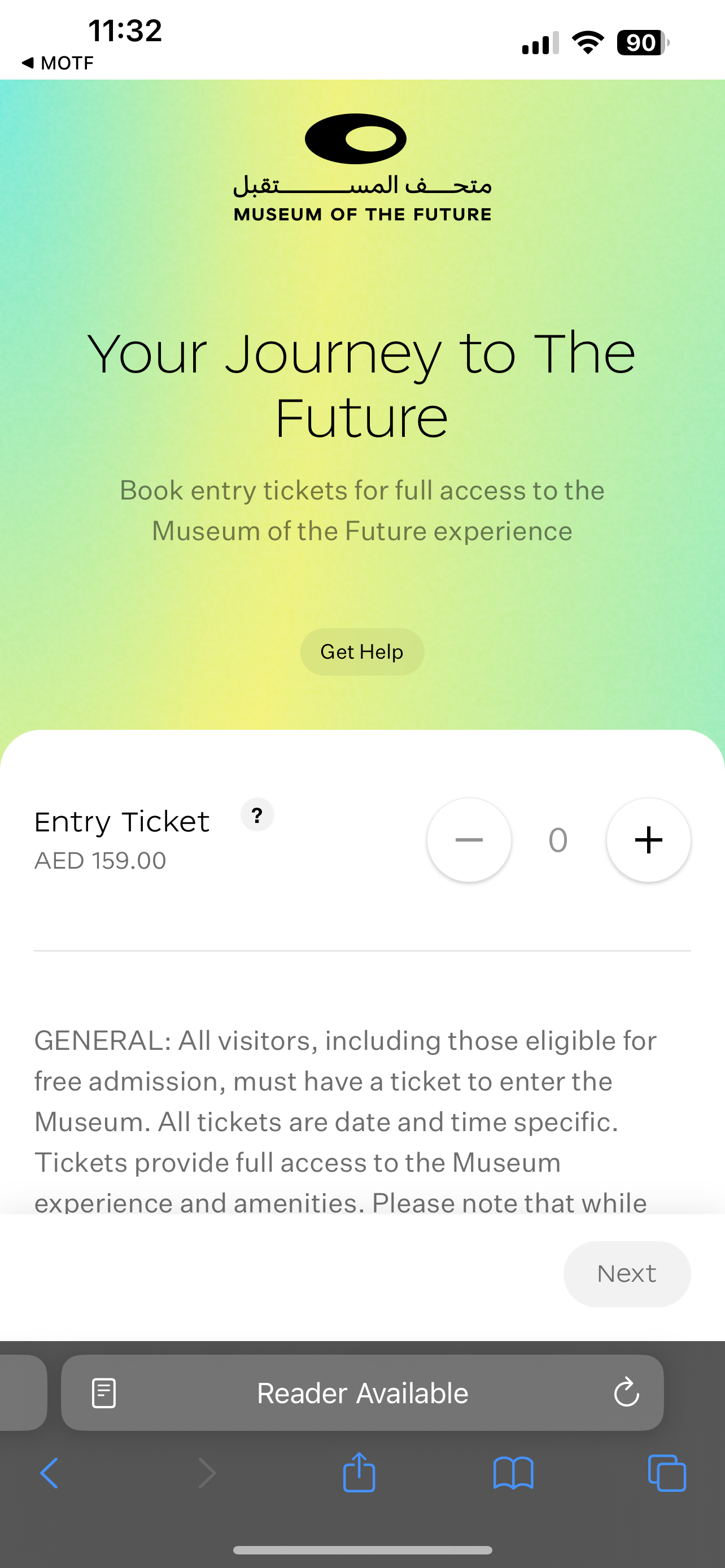
A digital onboarding flow was designed to begin the experience well before arrival, shaping expectations and setting the tone for a seamless visit. After purchasing tickets online, visitors are guided to download the MOTF app, where a conversational interface intuitively gathers context about them and their companion group. This enables a personalised, concierge-like experience—anticipating needs rather than reacting to them. In the lead-up to the visit, timely and contextually relevant notifications support preparation, from tailored reminders to integrated partner offers with Dubai Metro and Careem, ensuring effortless transit to the museum. The result is a pre-visit journey that feels curated, proactive, and tightly connected to the physical experience that follows.




A Living
Museum
A digital onboarding flow was designed to begin the experience well before arrival, shaping expectations and setting the tone for a seamless visit. After purchasing tickets online, visitors are guided to download the MOTF app, where a conversational interface intuitively gathers context about them and their companion group. This enables a personalised, concierge-like experience—anticipating needs rather than reacting to them. In the lead-up to the visit, timely and contextually relevant notifications support preparation, from tailored reminders to integrated partner offers with Dubai Metro and Careem, ensuring effortless transit to the museum. The result is a pre-visit journey that feels curated, proactive, and tightly connected to the physical experience that follows.
Interactive
Discovery
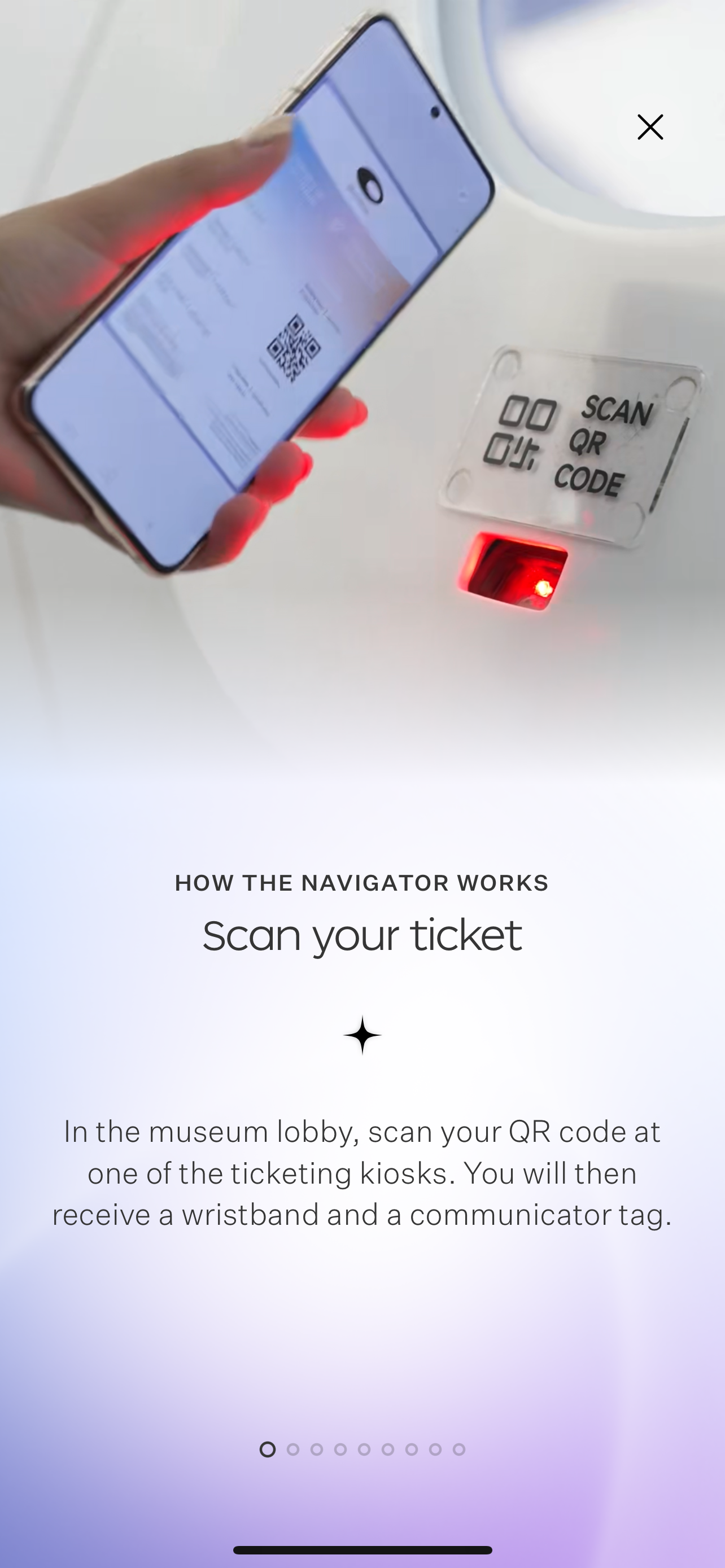
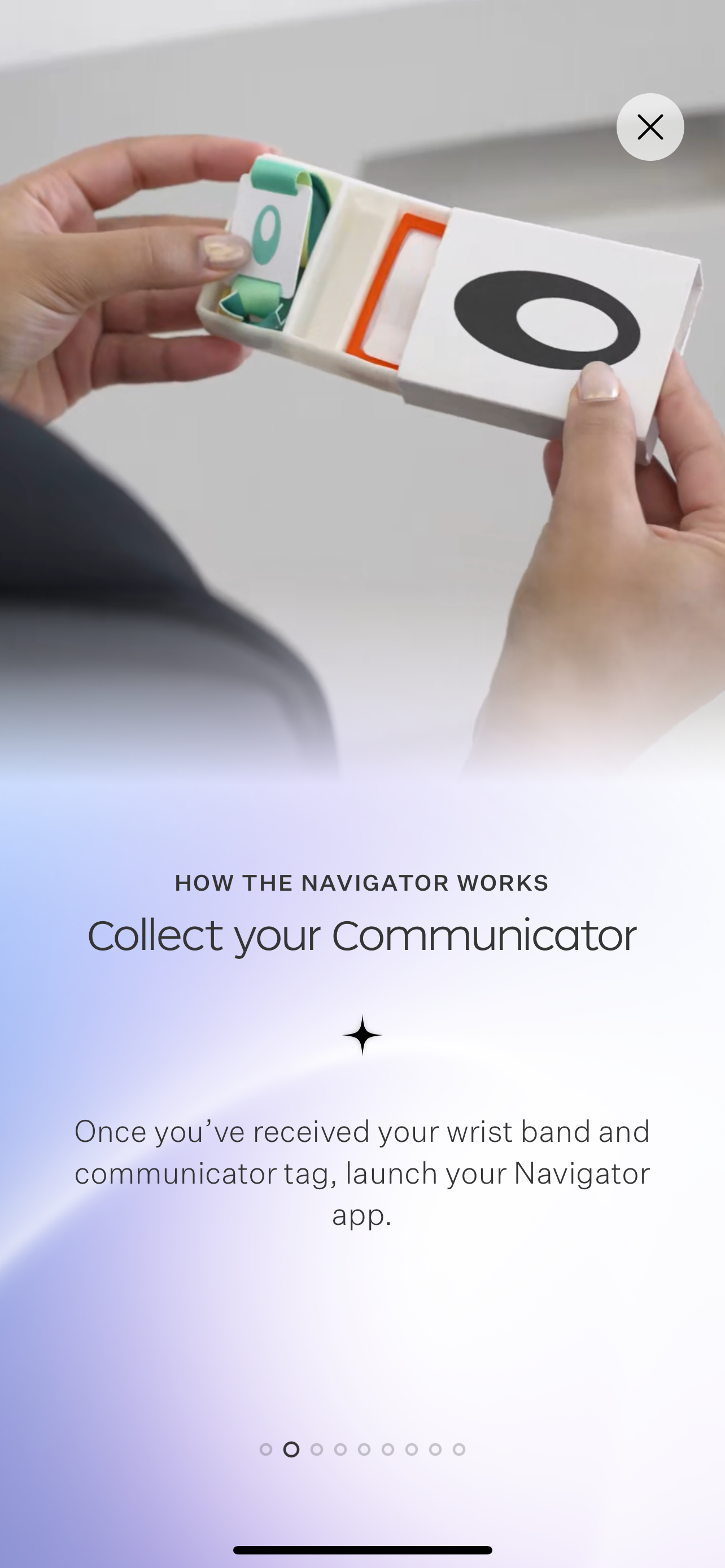
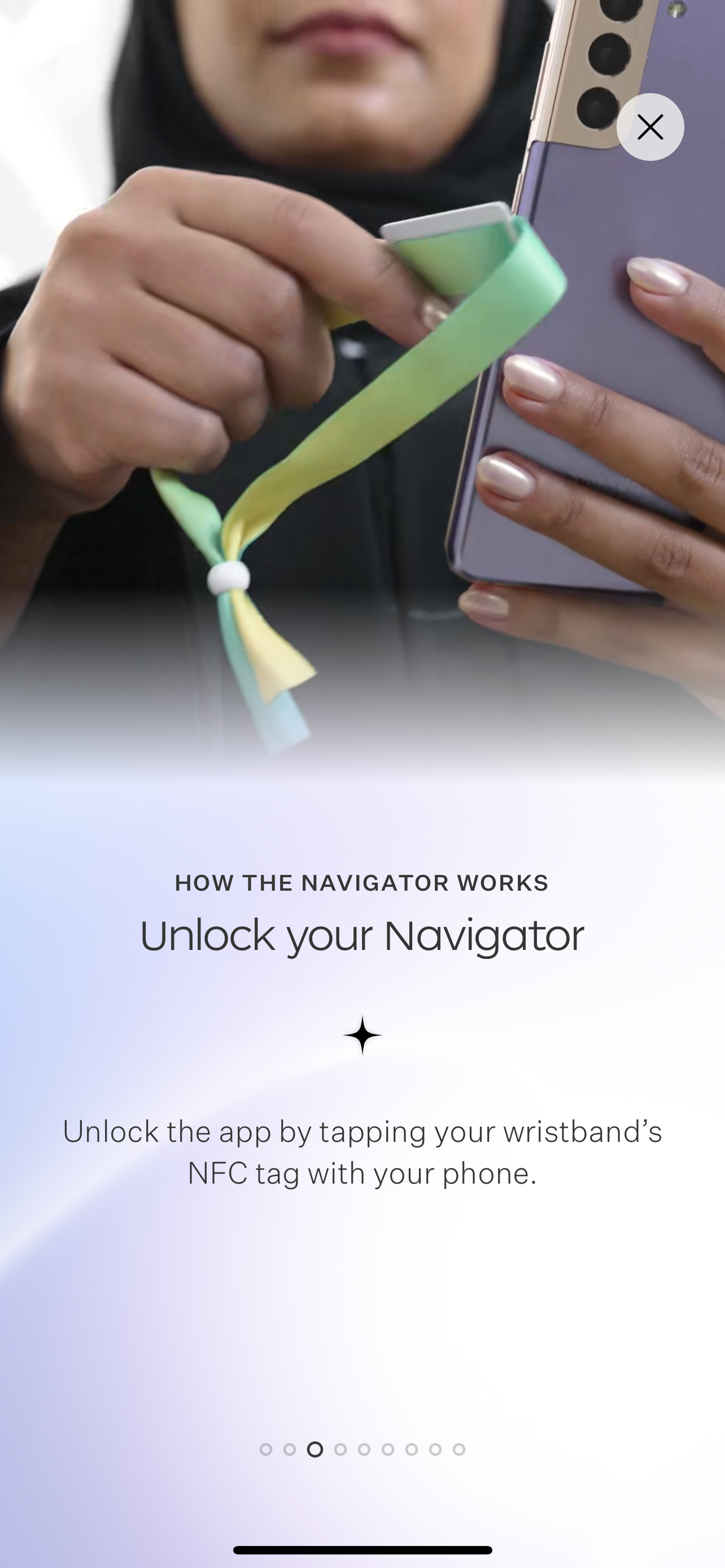
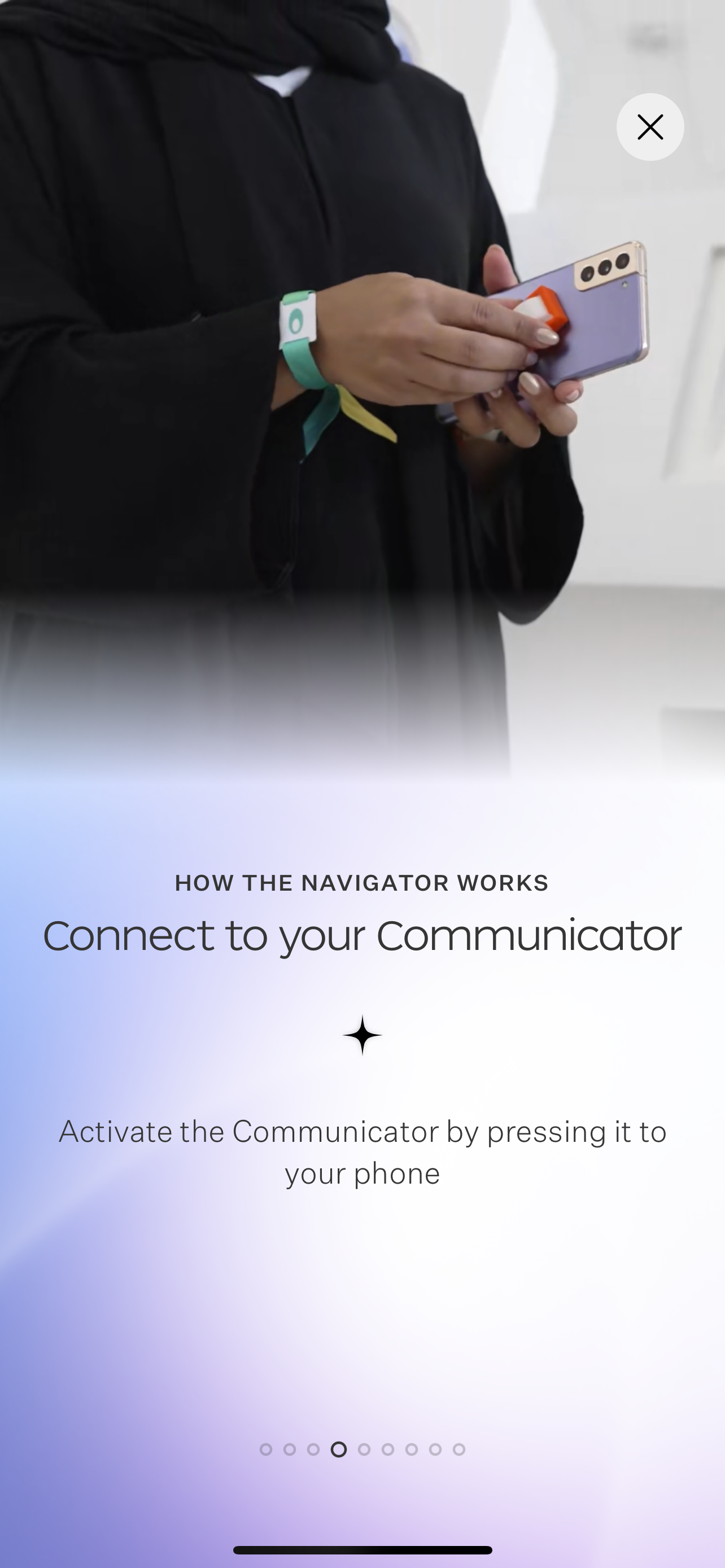
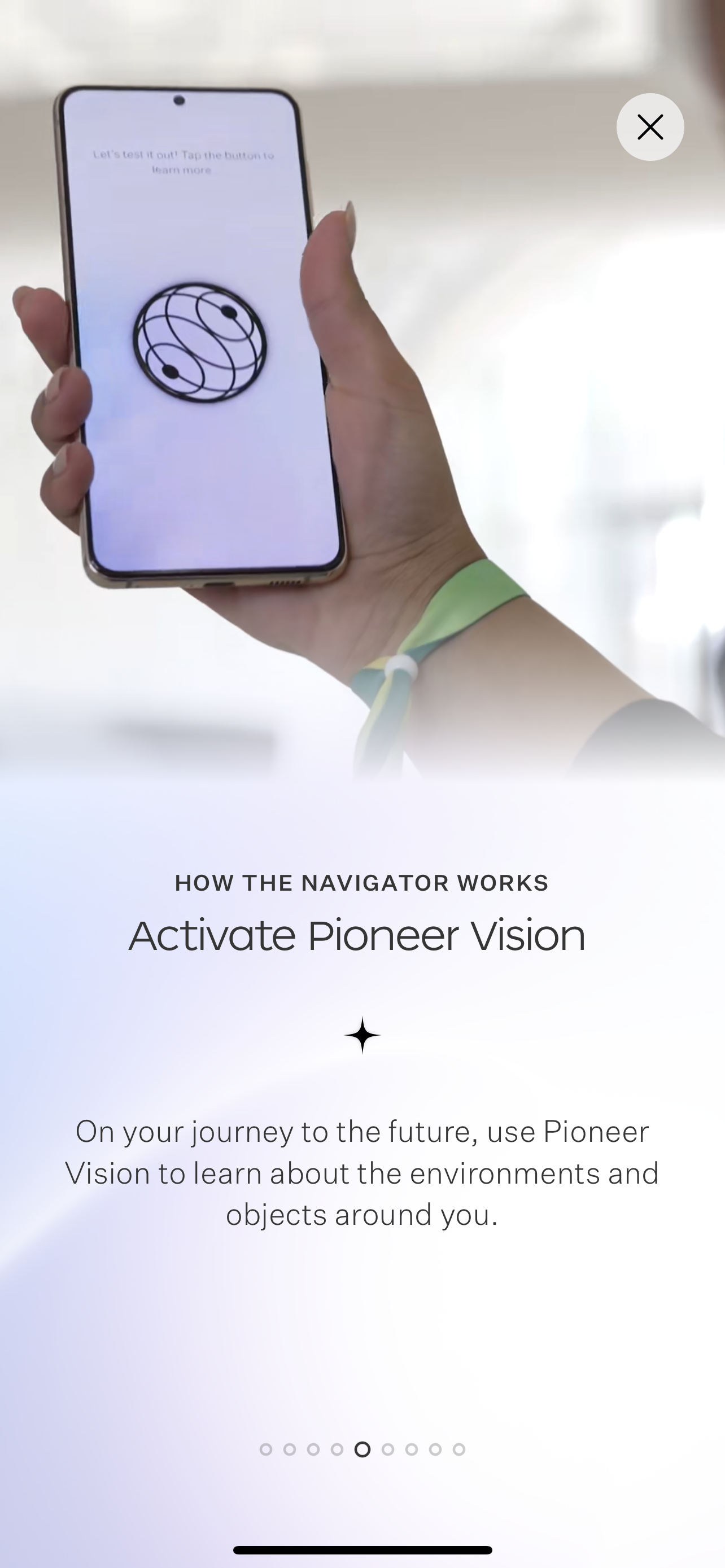
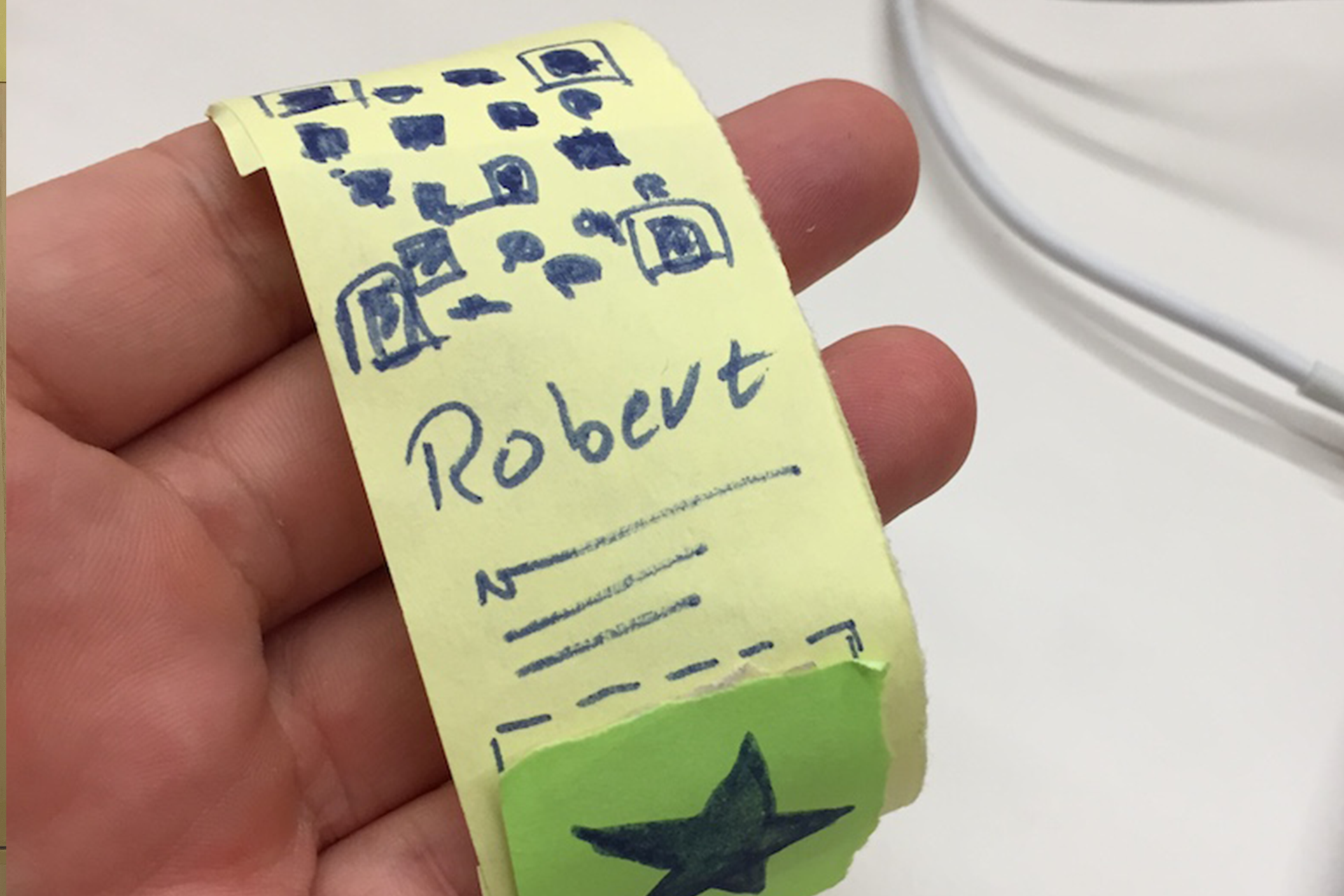
Each visit begins with a seamless check-in where tickets are scanned and validated at the booth, triggering the issuance of two connected devices: a Navigator wristband and a Communicator tag. Paired with the visitor’s phone, these work in tandem to unlock a personalised journey of discovery. The Communicator enriches the experience by surfacing deeper layers of content, allowing visitors to explore the science behind each exhibit in greater detail. The Navigator, equipped with NFC, enables direct interaction with installations—transforming passive viewing into active participation. In selected exhibits, visitors can experiment, test hypotheses, and generate outcomes shaped by their own inputs, making each interaction inherently personal.
Personalising each visitor's journey
No two journeys are the same. The outcomes of these interactions can be captured and saved within the app, allowing visitors to curate a digital record of their experience. Underpinning this is a service design blueprint that orchestrates the interplay between physical space, docent-led support, and a network of connected digital touchpoints—ensuring each interaction feels seamless rather than staged. The ability to extend the experience beyond the visit—taking home personalised results and insights—becomes a defining value proposition, reinforcing both memorability and differentiation.
Futures
Enabler
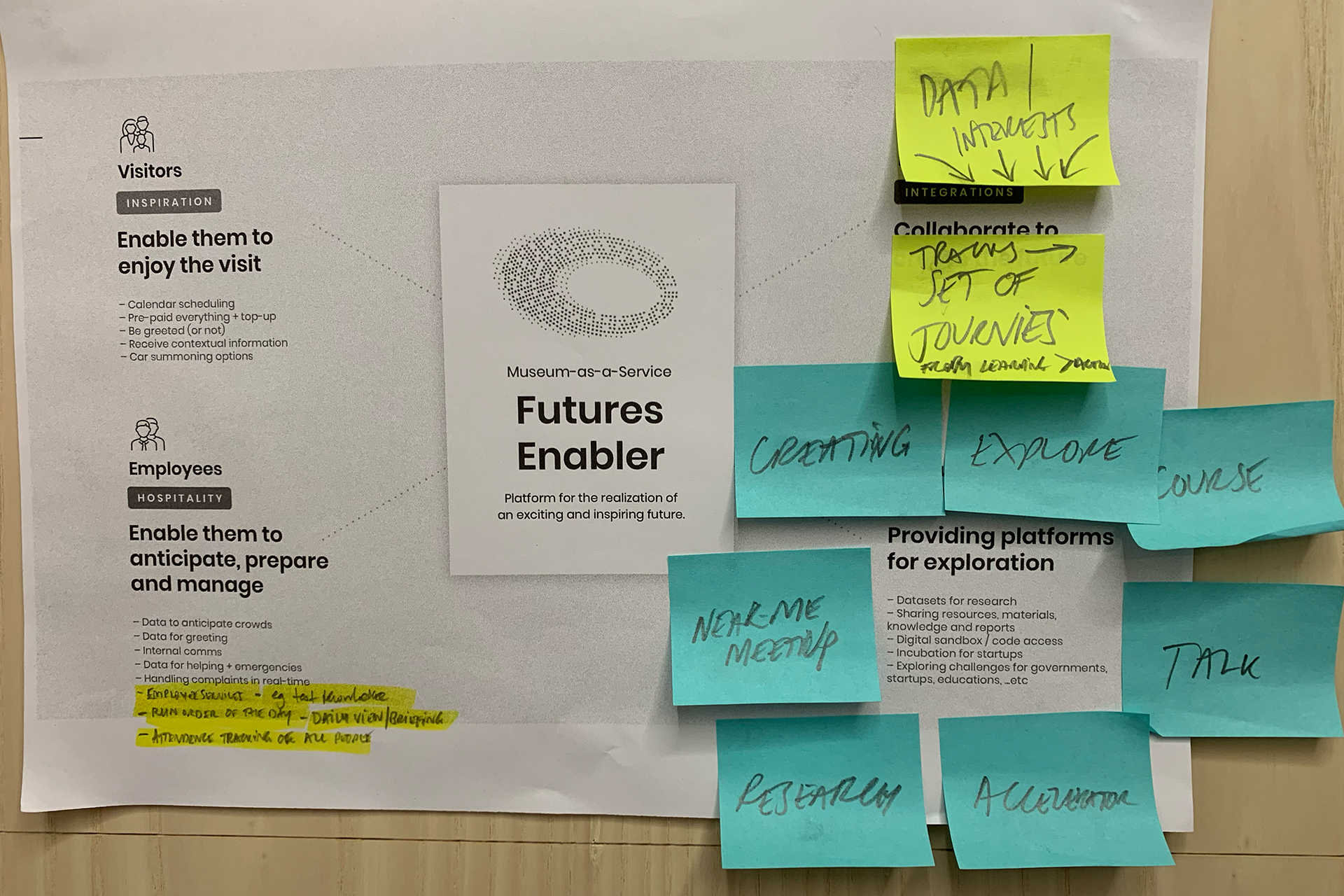
The Dubai Future Foundation, as the driving force behind the Museum of the Future, was established with a clear mandate: to position Dubai at the forefront of global science and technology, not just as a consumer of innovation, but as a creator of it. Central to this ambition is building stronger connections between citizens, the startup ecosystem, and emerging technology sectors—attracting talent, unlocking investment, and fostering cross-sector collaboration as part of the nation’s long-term growth strategy. The Museum of the Future became a strategic vehicle for this vision. Rather than a static exhibition space, it was conceived as an immersive, connected, and continuously evolving platform—one that translates complex technological narratives into tangible, personal experiences, and invites visitors to actively participate in shaping the future rather than passively observing it.
Investing in future industries
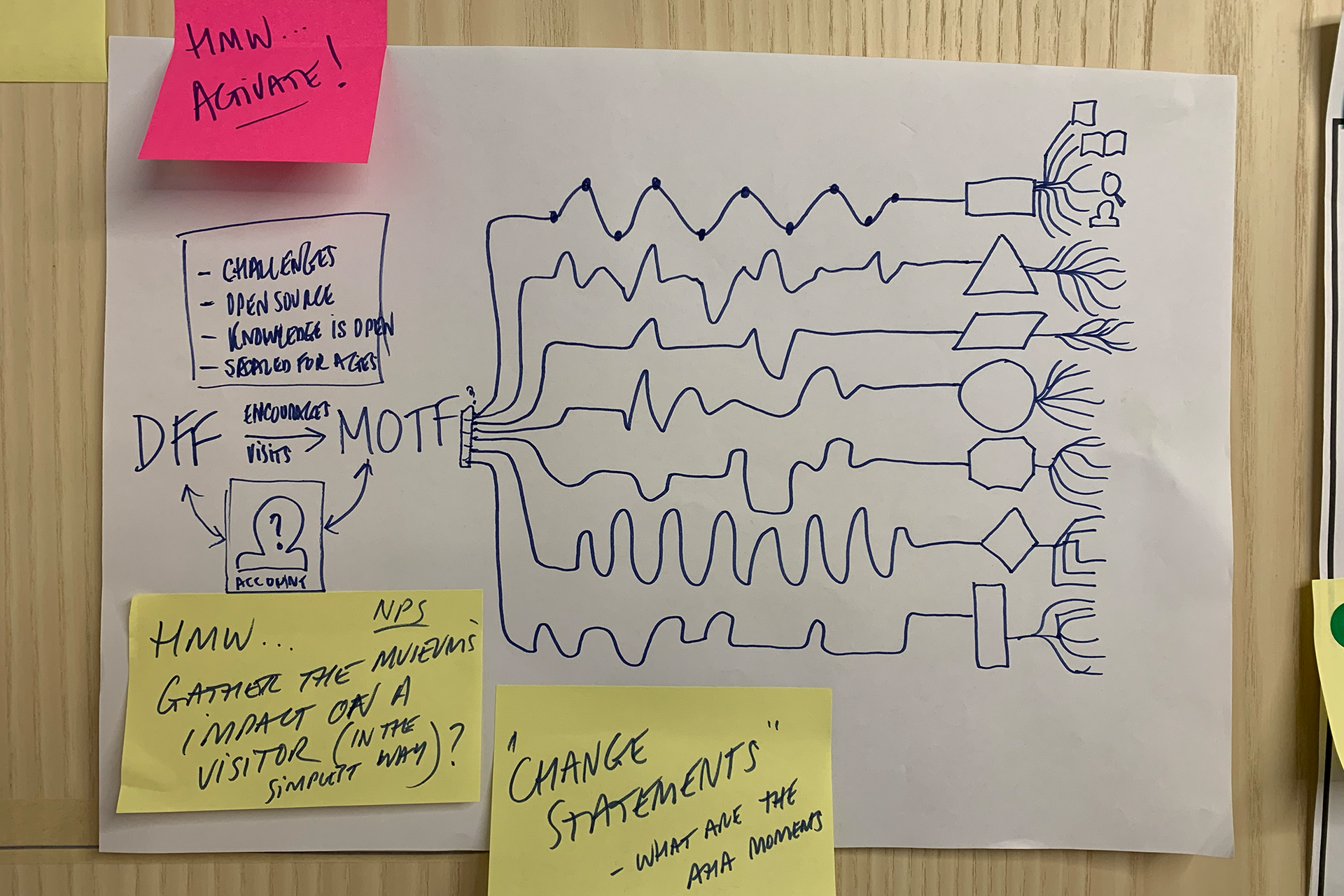
By designing for deeply immersive and connected experiences, each visitor interaction became a source of rich, structured data. This enabled the creation of nuanced visitor profiles—particularly among local audiences—revealing specific areas of interest across the broader science and technology landscape, from biotechnology to space exploration. These insights formed the foundation of a dynamic data ecosystem that could feed into CRM systems for the Dubai Future Foundation, enabling highly targeted and contextually relevant engagement. From curated event invitations to collaboration opportunities and educational pathways, this approach transformed one-off visits into ongoing relationships. The result is not just increased awareness, but sustained participation and long-term engagement—directly supporting the growth of a high-value, future-focused sector within Dubai’s economy.
Key
Impact
- Defined a jobs-to-be-done driven blueprint enabling targeted, scalable hiring from day one
- Increased visitor spend per visit by ~30%through journey optimisation and leveraging digital sell-through
- Drove ~20% uplift in post-visit engagement via data-driven re-engagement strategies
- Enabled data capture at every touchpoint, unlocking deep visitor insights and segmentation
- Positioned the museum as a gateway to Dubai’s innovation ecosystem, not just an attraction